
A literature review is a process of discovering, analyzing, and synthesizing knowledge on a particular topic, research question, or phenomenon, as well as a document that reports the result of the process. Like any process of discovery or research, it requires applying methods and design. As with any documentation, it follows a certain genre, style, and format.
There are different sub-genres and types of reviews. You review literature or evidence for various purposes during your academic studies and professional or scholarly career. Below, you will see the classification of literature reviews by purposes (learning or research), positionality (nested in a dissertation, concept paper, or a stand-alone review article), and methodology (qualitative, quantitative, mixed-methods, and others).
Learn more: Koz, O. (2022). Types of Literature Reviews.

A literature review as a research study
The exponential growth of scientific knowledge has caused the development of more scientific methods for a literature review. So far, the focus has been mostly on developing or applying existing qualitative and quantitative methods for analyzing research studies or secondary data. Below is a map of the methods of analysis used in research synthesis or meta-studies. The data collection methods are limited to “systematic” data collection in systematic, scoping, or integrative review using well-tested protocols or general guidelines.
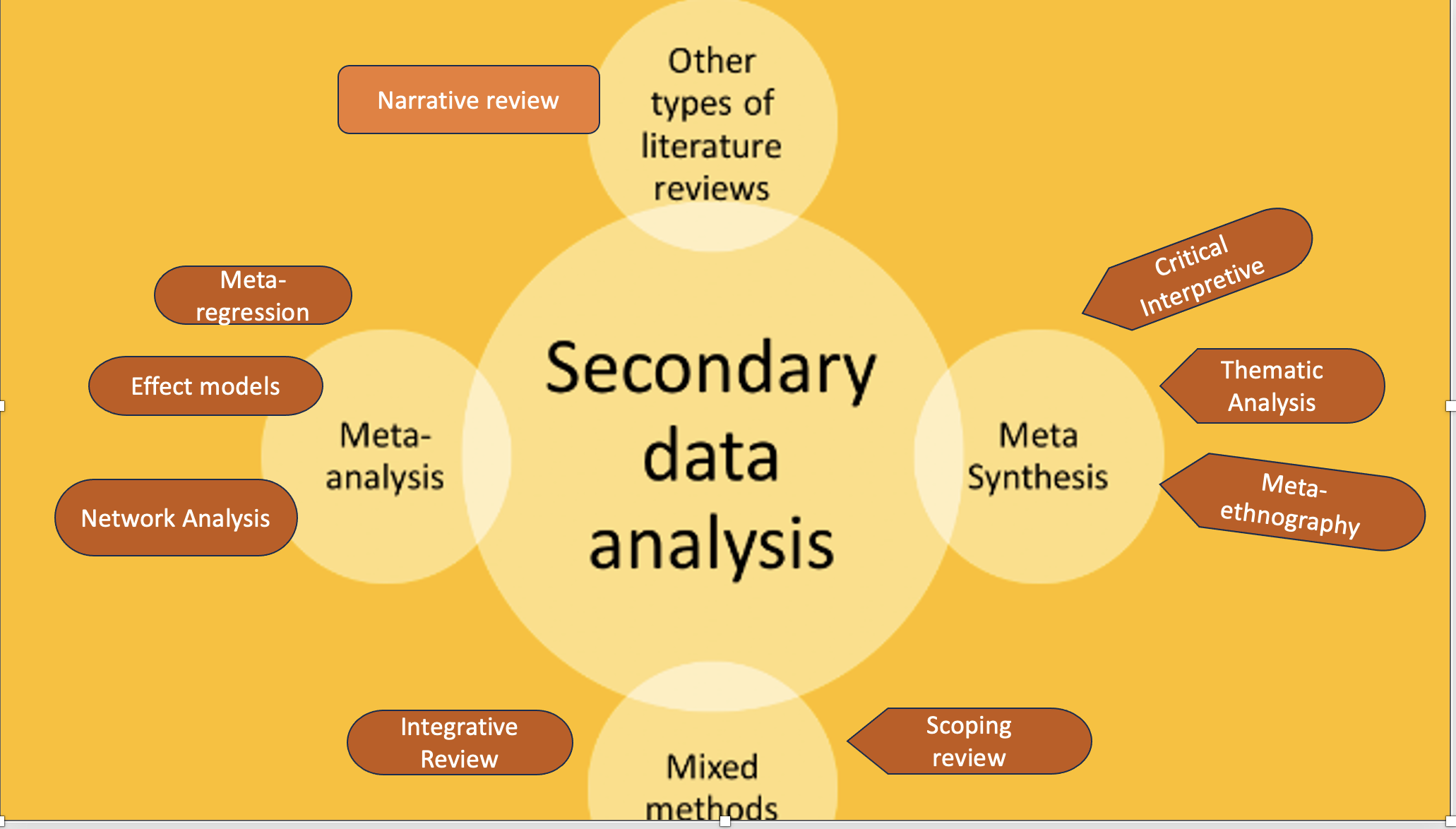
Guides to different types of literature reviews or evidence synthesis
- A literature review as an academic assignment
- A literature review for a Capstone Project (Education)
- A literature review for a thesis or a dissertation
- The Literature Review Design for Researchers Tool
- Dissertation’s Literature Review Design Tool
- A Research Synthesis
- A Systematic Review
- An Integrative Review
- A literature review for Ed.D. students: a course
- AI to support a literature review

